
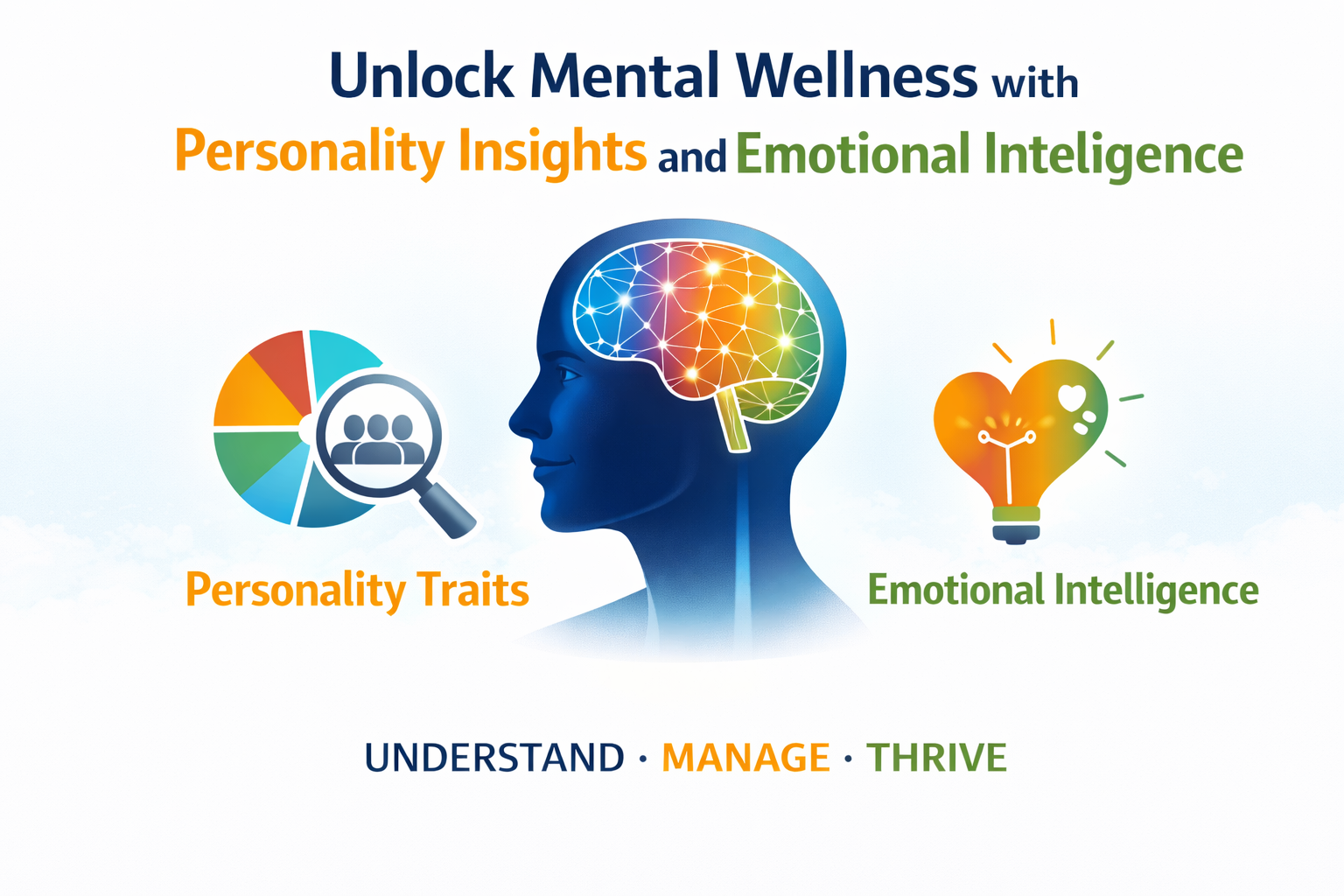
Mental wellness is crucial to leading a happy, balanced life, shaping how we manage stress, make decisions, and engage with others. As society places greater emphasis on emotional well-being, understanding how emotional intelligence (EQ) and personality assessments can elevate mental health is gaining traction. Although many view personality tests as mere entertainment, they can serve as pivotal tools for enhancing self-awareness, which directly improves mental wellness. This blog delves into how boosting EQ with personality insights can transform your approach to mental health.
Mental wellness isn’t just about the absence of mental illness. It’s about achieving balance in handling life’s challenges, building healthy relationships, and finding purpose in daily activities. With growing awareness of its importance, leveraging emotional intelligence through personality insights has become a key strategy for personal growth. The foundation of mental wellness is self-awareness, and this is where personality assessments come into play, guiding individuals toward a deeper understanding of themselves.
What is Mental Wellness
Mental wellness goes beyond merely avoiding psychological issues. It encompasses a positive state of well-being, where individuals are capable of managing stress, maintaining fulfilling relationships, and making thoughtful decisions. Maintaining mental wellness requires:
- Reduced stress levels
- Better interpersonal connections
- Resilience during adversity
- Greater life satisfaction
Strategies like mindfulness, exercise, and self-care contribute to mental health, but self-awareness remains the core element. Personality assessments help individuals reflect on their traits, enabling them to make conscious improvements to their mental state.
The Role of Emotional Quotient in Mental Wellness
Emotional intelligence, or EQ, refers to one's ability to manage emotions effectively, impacting how well they cope with life’s ups and downs. Unlike IQ, which measures cognitive abilities, EQ focuses on emotional awareness and management. People with high emotional intelligence can navigate complex social interactions and manage stress better.
The seven core components of EQ include:
Self-awareness: Knowing how emotions influence actions. Self-regulation: Managing emotions to remain adaptable in changing situations. Motivation: Driven by internal goals and values. Empathy: Recognizing and understanding others' emotions. Social skills: Building strong, positive relationships. Adaptability: Flexibility in handling life’s unpredictability. Problem-solving: Addressing emotional challenges effectively.
A dormant or neglected EQ can lead to what’s called the “undead” emotional quotient. This concept refers to emotional skills buried by stress or trauma, awaiting revival through enhanced self-awareness and emotional management.
Reviving the “Undead” Emotional Quotient
The “undead” emotional quotient often arises when individuals bury their emotions, focusing solely on external success while neglecting emotional development. Ignoring this aspect of oneself leads to emotional burnout, hampering mental wellness. Reviving EQ involves re-engaging with neglected emotions, increasing emotional awareness, and developing empathy.
Revitalizing your EQ can help:
- Restore emotional balance
- Strengthen relationships
- Improve stress management
Taking active steps to improve your emotional intelligence is key to maintaining long-term mental wellness. Personality assessments provide a starting point for identifying areas in need of growth.
Personality Tests as Tools for Enhancing EQ and Mental Wellness
Personality assessments do more than simply reveal quirks or preferences. They provide actionable insights into how your personality impacts your emotional health and overall well-being. Whether you're looking to improve self-awareness or address emotional triggers, personality tests serve as valuable guides for self-development.
These assessments help in:
Self-awareness: Identifying emotional patterns and personality traits that influence mental health. Growth strategies: Targeting specific areas where emotional skills are underdeveloped. Managing stress: Recognizing preferred stress-relief methods based on personality type. Improving relationships: Understanding how your personality affects communication and relationships with others.
Assessments like the Big Five, DISC, and Enneagram are particularly helpful in identifying personality strengths and weaknesses, guiding your journey toward emotional and mental growth.
Practical Ways to Boost EQ Using Personality Insights
Once you’ve completed a personality test, you can begin making tangible improvements to your emotional intelligence, ultimately enhancing your mental wellness.
Identify Strengths: Knowing where you excel emotionally is empowering. For example, you may have strong self-regulation skills but need to develop empathy. Recognizing this balance helps you focus on areas that require attention.
Address Emotional Triggers: Many personality tests can help you pinpoint emotional triggers. Understanding what provokes negative reactions allows you to create coping mechanisms. For instance, if you get defensive when criticized, you can work on being more receptive to feedback.
Develop Social Skills and Empathy: Building empathy is vital for mental wellness. Personality assessments reveal how you relate to others and provide strategies to enhance interpersonal connections, such as active listening or asking more questions in conversations.
Track Your Progress: Revisiting personality tests periodically can help measure emotional growth. As you work on different areas of EQ, re-taking the test gives you insight into where you've improved and where you need to focus.
Using Personality Tests as a Journey Toward Lasting Mental Wellness
Mental wellness is not a one-time achievement but an ongoing process that requires continuous self-awareness. Regular personality assessments serve as check-ins, helping you realign with your emotional and mental health goals.
By consistently working to enhance emotional intelligence, individuals can create a balanced approach to mental wellness, characterized by resilience, self-awareness, and positive interpersonal connections. Reviving the "undead" EQ is not just a possibility—it’s essential for long-term mental health.
The Power of Self-Understanding
The journey toward mental wellness starts with self-awareness. Personality insights can transform your understanding of emotional intelligence, helping you revive your "undead" EQ. This knowledge empowers you to take control of your mental health, build stronger relationships, and live a more balanced life.